
Dearborn County Court Record Requests
The Dearborn County Clerk of Courts keeps the case files for Circuit Court and Superior Courts I and II. Begin with Indiana MyCase. It gives a free public Chronological Case Summary, known as a CCS. When a document image is missing online, try the courthouse terminal or ask the clerk about inspection, a plain copy, or certification. The clerk can also confirm the court, case number, or date, and point you to the right payment channel.
You can reach the office in person or by phone, and sometimes by mail once the clerk gives current instructions. County administrative records go through the department or County Auditor route under Indiana's Access to Public Records Act. Transcripts and audio use a separate channel. The clerk publishes no generic court-copy email, mail form, or turnaround promise.
- Search MyCase and copy the full court identifier, case number, document title, and event date.
- Check the official document-access table to see whether that case type offers the image online.
- Choose remote access, courthouse inspection, phone confirmation, or a clerk-directed mail request.
- State whether a plain copy, certified copy, judgment, CCS, transcript, or audio record is needed.
- Confirm the fee, payment method, identification rule, delivery method, and turnaround before ordering.
Four Dearborn Court Record Layers
One Dearborn County case can leave behind more than one kind of court record. The CCS gives you the fastest view of events. A filed image shows the actual pleading or order, when remote access allows it. A certified copy carries the clerk's authentication, which is what most other offices will demand. Transcripts and audio files are different. They capture what happened at a hearing. They live in the reporting process rather than as an ordinary MyCase image.
| Record layer | What it provides | Best source |
|---|---|---|
| CCS | Dated events, settings, orders, status, and disposition | MyCase, terminal, or clerk |
| Filed image | The public complaint, motion, order, judgment, or attachment | MyCase when eligible, otherwise clerk |
| Certified copy | An authenticated reproduction for an official use | Dearborn County Clerk |
| Transcript or audio | The spoken hearing record, not the event list | Court reporter or TRX |
A printout from MyCase is just a copy. The CCS itself is the official Dearborn County court record, and only the clerk's certification makes it one.
Kinds of Court Records
One clerk serves Dearborn Circuit Court and Superior Courts I and II. That covers criminal, civil, probate, juvenile, small-claims, traffic, and protective-order work. What the public can reach depends on Indiana access rules and the type of record, not just the case label.
- Chronological Case Summaries and public setting histories
- Complaints, petitions, motions, answers, and eligible filings
- Signed orders, judgments, dispositions, and sentencing orders
- Public probate, estate, small-claims, civil, and traffic material
- Transcript or audio products from the court's designated channel
Some material stays harder to reach: domestic-relations, juvenile, mental-health, protection-order, and sealed records. Even a public event line on the docket does not guarantee a document you can pull up.
Dearborn Court Transcripts Use TRX
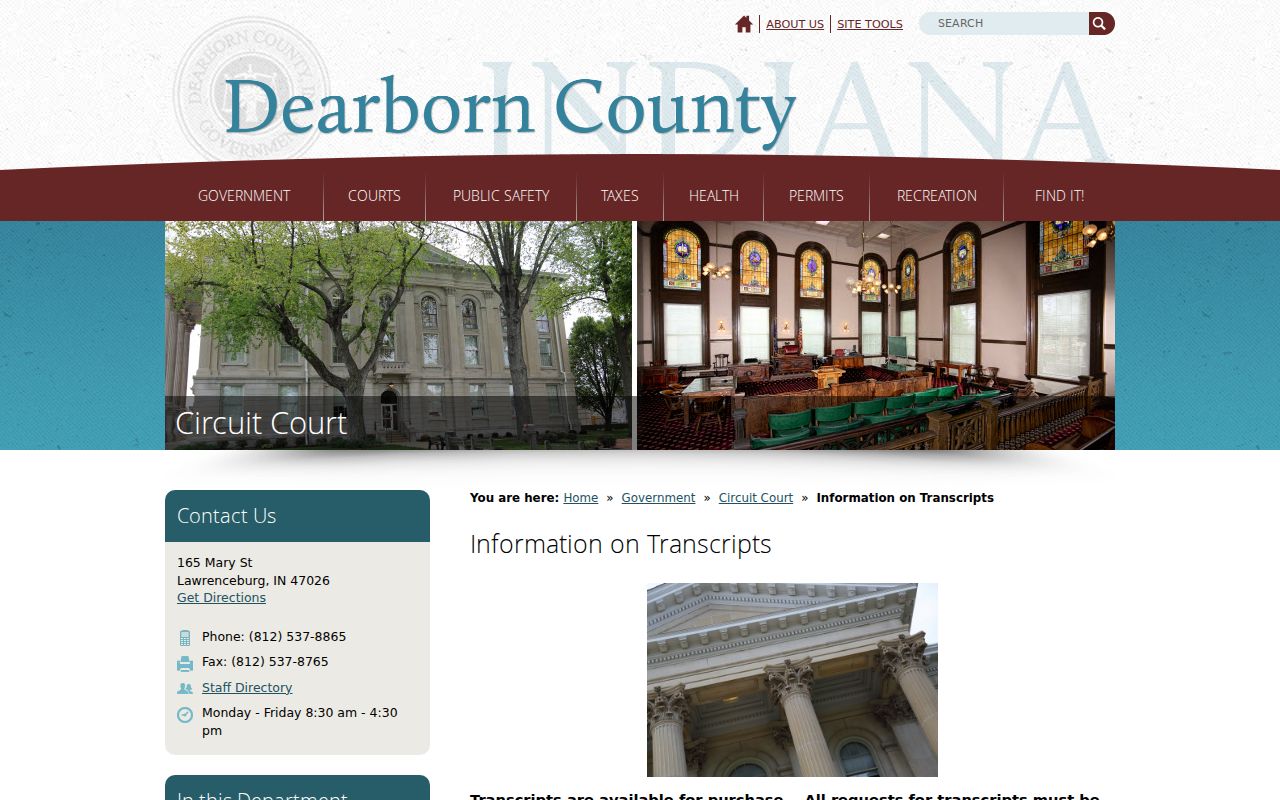
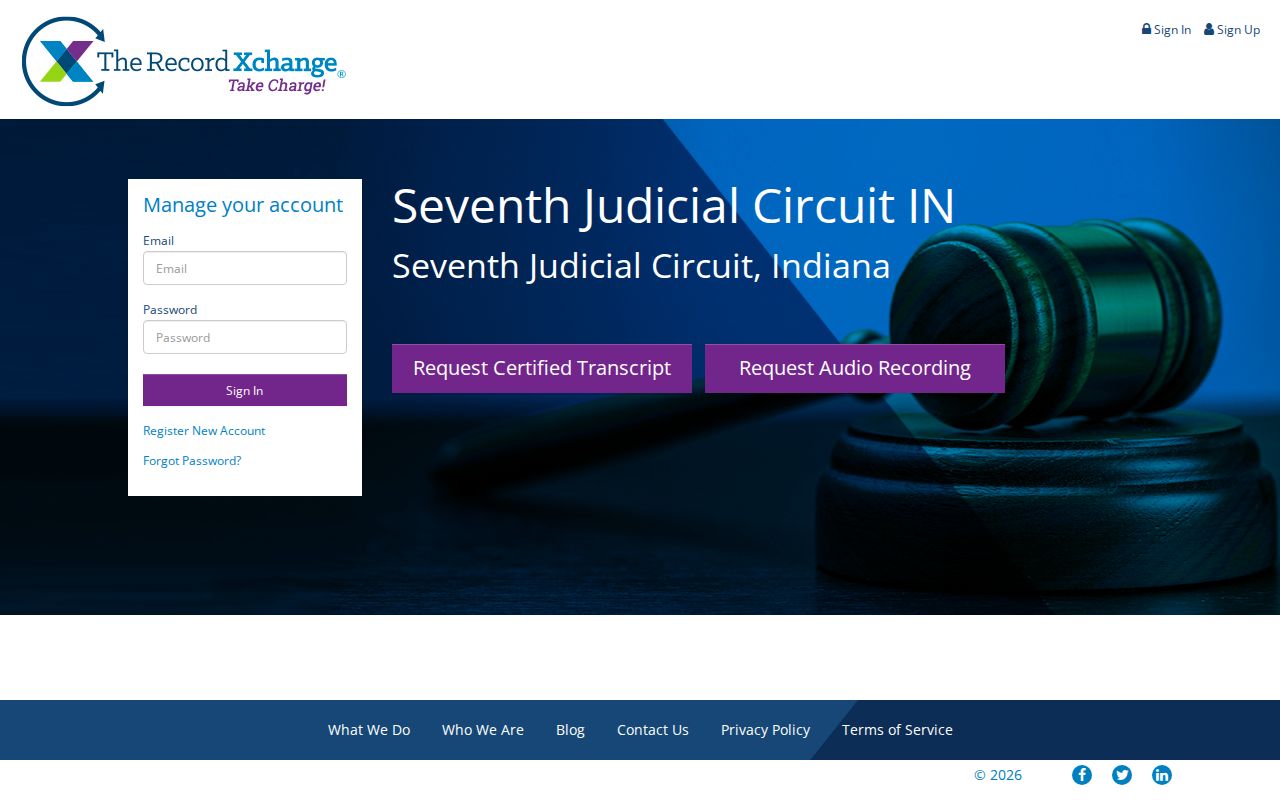
For a spoken record in Dearborn Circuit Court, the county directs every audio or transcript request through TheRecordExchange. The Dearborn Circuit Court transcript instructions treat that kind of request separately from a routine clerk copy, so check the county's own page before you send anything in.
A CCS entry can confirm a hearing happened. It cannot give you the testimony. Gather the hearing date, the court, the case number, and the product you want. Do this before you request anything.
The TRX request and payment portal is the working channel for Circuit transcript material. The portal's public interface is distinct from MyCase and from the county's payment endpoint. So use it directly for these orders.
Superior Court works differently. Ask the specific office whether the court reporter or the clerk takes the transcript request, because the Superior Court provides no single shared form.
Court Records: What They Contain
Dearborn County follows Indiana's four-group case number format. Take 15C01-2608-CF-000123 as a neutral example. Each block tells you something: county and court, year and month, case type, then the sequence number. Read the header of any Dearborn County court docket first, since it keeps similarly named cases apart and lets the clerk pull the exact file.
| Case header | Court identifier, case number, type, filing date, status, caption, and judge. |
|---|---|
| Parties | Public party names, roles, and counsel, with protected data omitted or redacted. |
| CCS events | A dated list of filings, orders, hearings, resets, judgments, and disposition. |
| Settings | Future hearing date, time, type, and available courtroom detail. |
| Documents | Eligible complaints, motions, orders, judgments, or exhibits. |
| Financial fields | Costs or balances that should be confirmed because online figures may lag. |
Indiana Odyssey labels its event list the CCS, and every line in it matters. A filing, a continuance, a dismissal, and a judgment each carry a distinct meaning, so read them closely. When one setting changes later in the case docket, the newer entry usually controls what happens next.
Dearborn Online Record Limits
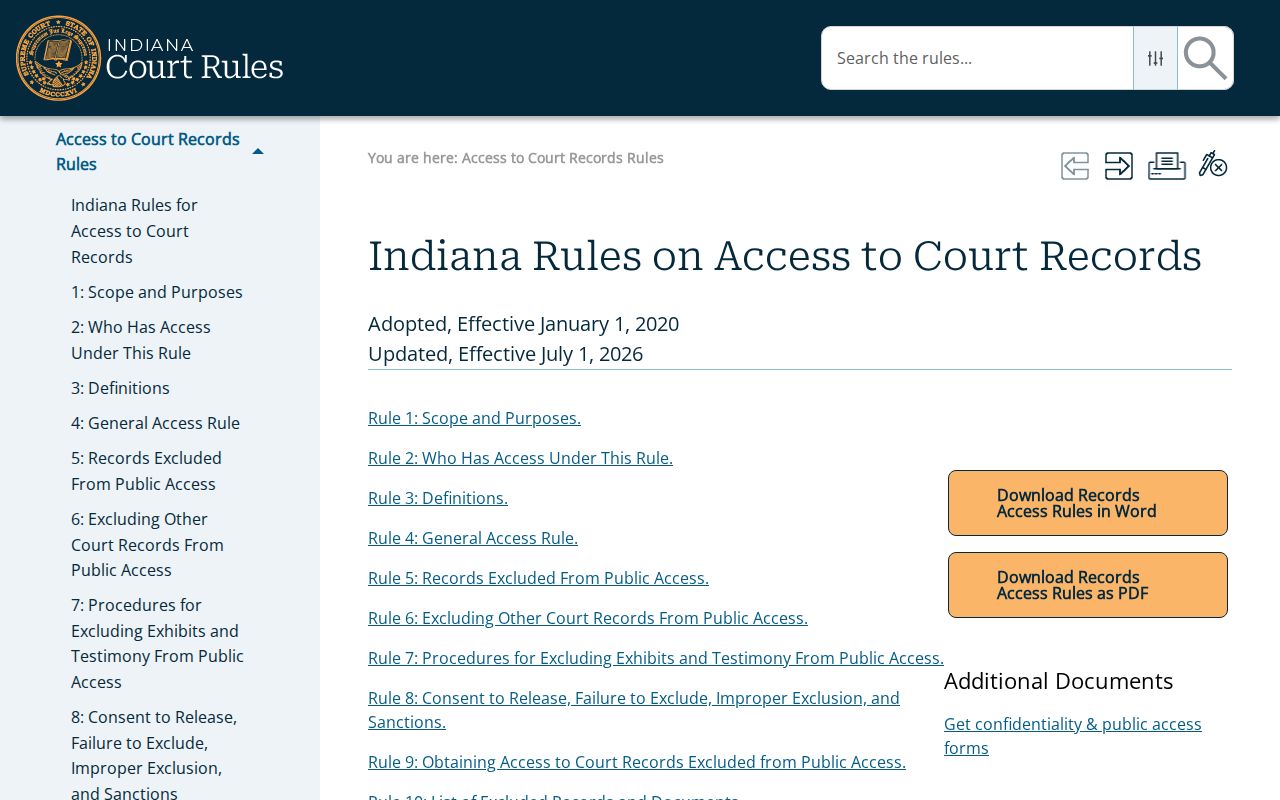
Not every Dearborn County court record can be pulled from home. The MyCase public-document access table shows which case types allow remote images. Felony and misdemeanor files tend to be limited. Civil tort, plenary, foreclosure, tax, and certain order categories often open up more broadly. The official rules behind these limits sit in the state's own access policy page. That page spells out each category.
A trip to the courthouse can turn up a public record. No website will hand you that record. Older images are a common gap. If the CCS entry appears but the image does not, jot down the event date and title, then ask the clerk how to order the copy. And keep this in mind: no online image does not prove that no public Dearborn County court record exists.
Copy Fees and Certification
The clerk's office posts no fee card or certified-copy form, so call before mailing any money. Recorder fees cover land documents only. They do not apply to court copies. Transcript rates come from Dearborn Local Rule LR15-AR-10.
| Item | Published amount | Next step |
|---|---|---|
| Public MyCase search | $0 | Use for public CCS data and eligible images. |
| Plain court copy | Not located | Confirm the per-page charge with the clerk. |
| Certified court copy | Not located | Ask for the present fee and form. |
| Circuit transcript | $5 per page; $35 minimum | TRX handles requests; public retainer is at least 50%. |
| Expedited transcript | $5.50 per page | Confirm availability first. |
| Transcript copy | $2.50 per page | Binding and exhibits can add cost. |
Copying is not the same as filing. The filing amounts shown for new civil, small-claims, criminal, or traffic cases in Dearborn County say nothing about what a clerk charges to copy a document already sitting in a court file.
Dearborn County Clerk of Courts
165 Mary Street
Lawrenceburg, IN 47025
Monday-Friday, 8:30 a.m.-4:30 p.m.
812-537-8867
Older Dearborn Court Records
Two gaps shape what a Dearborn County docket search can reach. A fire in 1826 destroyed early records, per the courthouse's own history. And plenty of newer cases were filed before MyCase began offering images. Neither gap wipes out the clerk's paper files. Indiana moved courts onto the Odyssey system in stages. So how far back an electronic docket goes depends on when the case was filed and when that court converted. Depth varies.
Genealogy work calls for a wide net. Start with the party name you know, plus a date range, case type, and court. Ask the clerk whether the material is indexed, on paper, or only at the courthouse. A modern case number will not fit an early file. Names shift too, through old spellings, estate roles, or captions. Give staff enough context to find a likely volume. But leave legal conclusions out of the request.
Keep any courthouse inspection request tight. Name the record and give the approximate date. Say whether you just need to view it. If you want copies, ask whether staff must pull the file from storage. Also ask whether anything needs review or redaction first. Those steps affect timing even on a fully public record.
Access Rules for Court Records
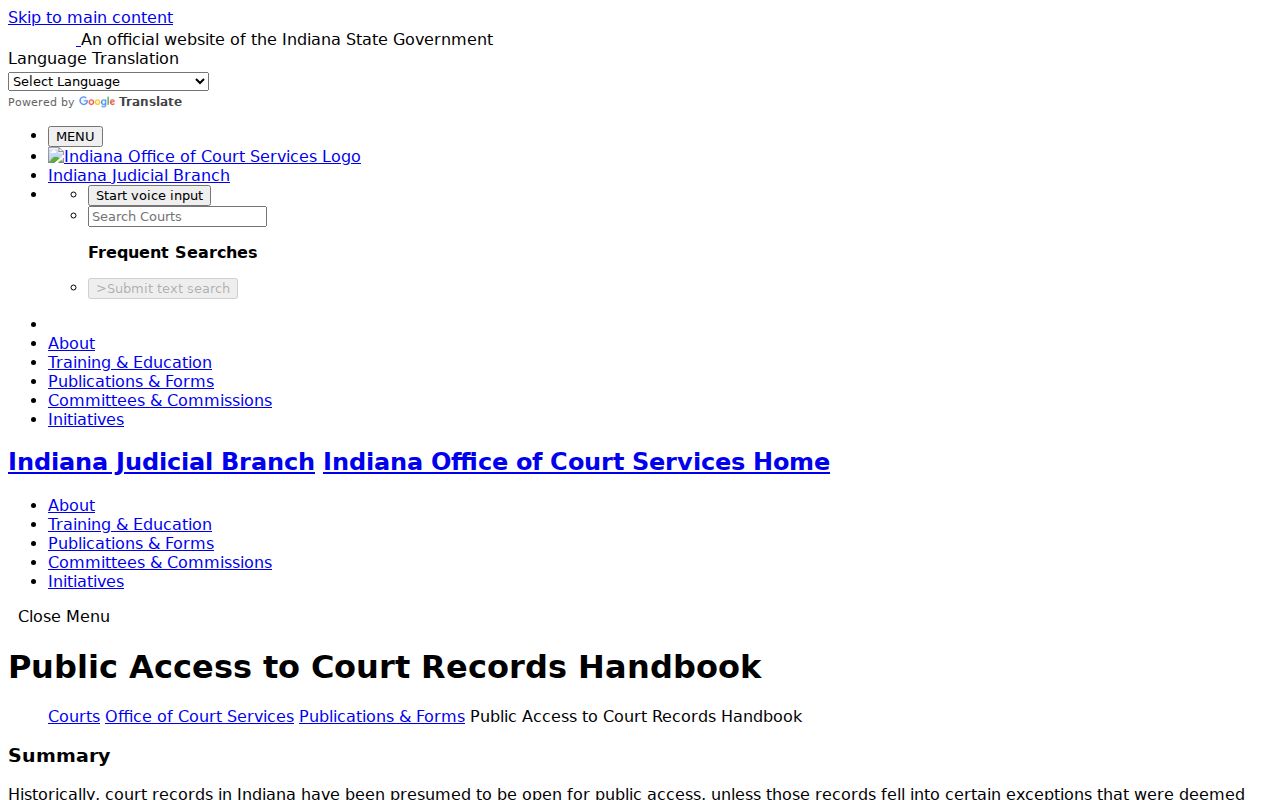
Indiana Access Rule 4 starts from openness: records are public by default. Access Rule 5 then carves out excluded cases, records, and protected data. Sealed, confidential, and expunged are three different things. A case can stay visible on the docket. But one name or one document may be withheld.
The Indiana public-access handbook adds practical detail to both rules. Its advice is worth copying: ask which rule applies, rather than hunting for a loophole.
Administrative Rule 9 splits remote access from courthouse inspection. The state's Access to Public Records Act covers broader county records, but judicial files answer to the court rules, not that statute.
Extraordinary access: Access Rule 9 provides a verified written process for an excluded record, with notice, a response period, a hearing, and a court decision. A case number alone grants no access.
Exact Dearborn Judgment Requests
Name one document. That is the secret to a clean Dearborn County judgment request. Include the full case number and court identifier. Add the caption, the judgment or order date, and the copy type you need. Quote the event text from the CCS. Need an authenticated copy? Say so before the clerk prices or produces anything.
Remember that the Records of Judgments and Orders layer is not a browser summary. A CCS event can point to an order without being the signed order itself. Still hunting for the matter? Run the county docket search first. Then request the Dearborn County court record.