
Dearborn County Criminal Docket Searches
Indiana MyCase is the first stop for any nonconfidential Dearborn County criminal case. It pulls public Odyssey data from four courts. That means Circuit Court, Superior Court I, Superior Court II, and Lawrenceburg City Court. Got a full case number? Use it. A name search also works. Common names need a Dearborn County court filter plus a filing-date range to cut the noise. Remember that MyCase only displays case information. The Indiana E-Filing System is the separate tool attorneys use to submit pleadings.
When a result looks confusing, an image is missing, or you need an authenticated copy, turn to the Dearborn County Clerk of Courts. Counter and public terminal access can surface records that remote viewing does not. Staff can also help. Just provide the case number, a description of the record, and the date range.
- Open MyCase and choose a Case, Name, or Attorney search.
- Enter the identifier or name, then limit the court to Dearborn County.
- Compare the court code, case type, filing date, and parties.
- Open the CCS and read the newest event and setting first.
- Ask the clerk for a certified record when an official copy is required.
Dearborn Criminal Search Fields
The official MyCase search interface shows how the portal splits case, name, and attorney searches into separate tabs.
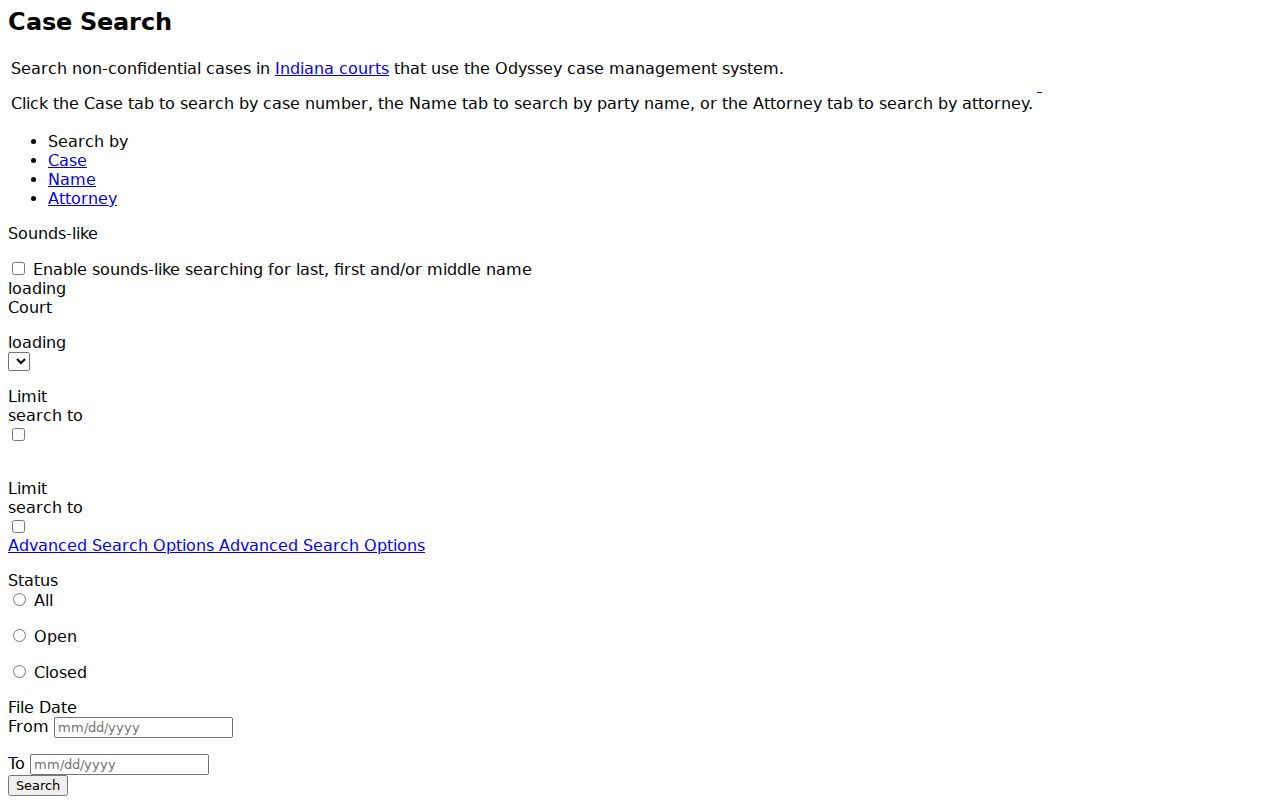
That split matters. Pick the case tab when you hold an exact identifier; pick the name tab only with filters strong enough to screen out unrelated Indiana cases. The official MyCase search tips cover wildcards, the sounds-like option, date formats, and the limit on returned results.
Surnames get spelled different ways. So lean on those tips, add the local court or a tight date range, and never assume the first matching record is the one you want.
Criminal Dockets: What They Show
Indiana names its chronological docket the Chronological Case Summary, or CCS. A Dearborn County criminal CCS opens with the basics. Those are the court, case number, case type, filing date, caption, status, and judge. From there it runs through parties and counsel, charge events, motions, orders, hearings, plea activity, trial events, sentencing, costs, probation review, and disposition, wherever those fields stay public. One caution applies. Seeing an event line does not guarantee its document image is available to download.
| Case number | 15C01-2608-CF-000123 is a neutral Circuit felony example. |
|---|---|
| Charges | Counts, offense text, statute, and level or class may appear with amendments. |
| Settings | Date, time, court, hearing type, and status help confirm an appearance. |
| Plea and trial | Entries record plea hearings, bench or jury trials, and related orders. |
| Outcome | Disposition, sentence, dismissal, costs, and later review appear in sequence. |
Read the CCS top to bottom, then go back to the newest line. A filed charge is only an allegation. A plea event is not always the final sentence, and a dismissed count says nothing about the other counts.
Dearborn Criminal Court Codes
Dearborn County carries code 15 under Indiana Administrative Rule 8. The first block names the court: 15C01 for Circuit Court, 15D01 for Superior Court I, and 15D02 for Superior Court II. Lawrenceburg City Court uses 15H02. Year and month follow, then the case-type code and sequence. Neutral examples look like 15D01-2608-F6-000123 or 15D02-2608-CM-000123.
- CF or F-level code
- A felony category. Historical Class D codes and newer felony-level codes can coexist.
- CM
- A criminal misdemeanor case type.
- Setting
- A scheduled appearance, hearing, trial, plea, sentencing, or review.
- Disposition
- An outcome such as conviction, dismissal, transfer, or another closing event.
Never guess from a partial code; use the live CCS text instead. The codes steer a docket search, but meaning comes from the event text and current status.
Criminal Case Stages on the Docket
A typical Dearborn County criminal case moves from charge and filing to initial hearing and bond. Then come pretrial or status settings, motions, plea or trial, sentencing or disposition, and finally probation review or closure. Each step can spawn several CCS lines. An amended information may replace a charge. A reset can slide a hearing to a new date. A specialty-court referral can add supervision events. The underlying case stays with the referring court.
Docket flow: Charge Filed › Initial Hearing › Pretrial Settings › Plea or Trial › Sentencing or Disposition › Review or Closure
The newest dated entry controls what happens next. If an earlier setting reads continued or vacated, hunt for its replacement. None appears? Confirm with court staff instead of trusting the old time.
Dearborn Drug Court Entries
The Dearborn ACC Court program tackles eligible, drug-driven criminal conduct through a structured court route.
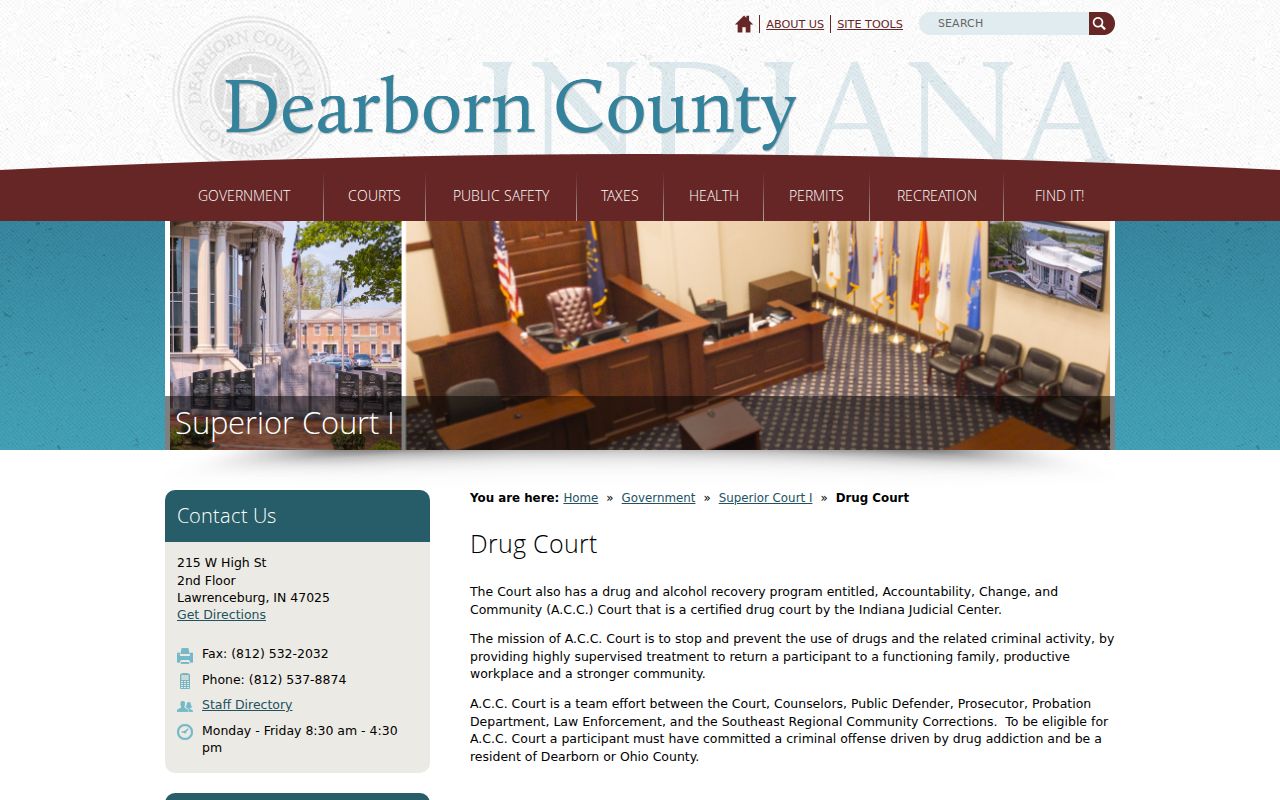
Local context lives on the program page, but it does not replace the CCS. A referral, acceptance, review, sanction, or completion can each generate events without opening a separate public case. Veterans Treatment Court raises the same jurisdiction point: Superior I may run the program while the referring court keeps the original case.
Search the underlying case. Specialty-court participation does not mean the original Dearborn County criminal docket moved to a separate public database.
Dearborn County Criminal Docket Courts
Dearborn Circuit Court takes murder cases, major felony work, juvenile matters, and other assigned cases. Superior Courts I and II handle general criminal work. That includes misdemeanors and Level 6 matters under local allocation rules. Level 1 through Level 5 felonies are assigned randomly. The local plan splits them three-fifths, one-fifth, one-fifth. Related counts generally stay with the original assignment.
| Court | Code | Criminal search clue |
|---|---|---|
| Circuit Court | 15C01 | Murder and major felony work can appear here. |
| Superior Court I | 15D01 | General criminal and assigned felony work. |
| Superior Court II | 15D02 | General criminal work under local allocation. |
| Lawrenceburg City Court | 15H02 | Ordinances and county infractions within its jurisdiction. |
Do not know which court holds the case? Search every Dearborn County court. Felonies do not always sit in Circuit Court, and lower-level charges do not always sit in one Superior Court.
Dearborn Sentencing Order Limits
A Dearborn County criminal CCS may list a sentencing order as entered. Yet it can keep motions, exhibits, and protected details off the online view. Indiana’s access table often allows less remote document access for felony and misdemeanor cases. That can be less than the event list implies. Think of the CCS as a chronology, an index in time. The filed document itself sits in the case file. A certified copy is the clerk’s authenticated product.
When an order has no image, write down the case number, the event date, and the title. Then ask the clerk about inspecting or copying it. Transcripts run on a separate track. Dearborn Circuit transcript and audio requests go through TheRecordExchange, with local rates. A CCS entry that a hearing happened does not reproduce what anyone said in the courtroom. Note: MyCase financial fields may not be current. Confirm a live balance with the clerk.
Access Rules for Criminal Dockets
Public access is the starting rule in Dearborn County. It is not a promise that every criminal record is online. Indiana Criminal Rule 1.2 treats criminal court records as public, subject to statewide access rules. Access Rule 4 keeps records open. Another rule, a statute, a seal, or an order can still exclude them. Expunged cases under Indiana Code 35-38-9 do not appear as ordinary public results. The official Access Rule 5 page lists the exceptions. It identifies which cases, records, and protected information fall outside that openness.
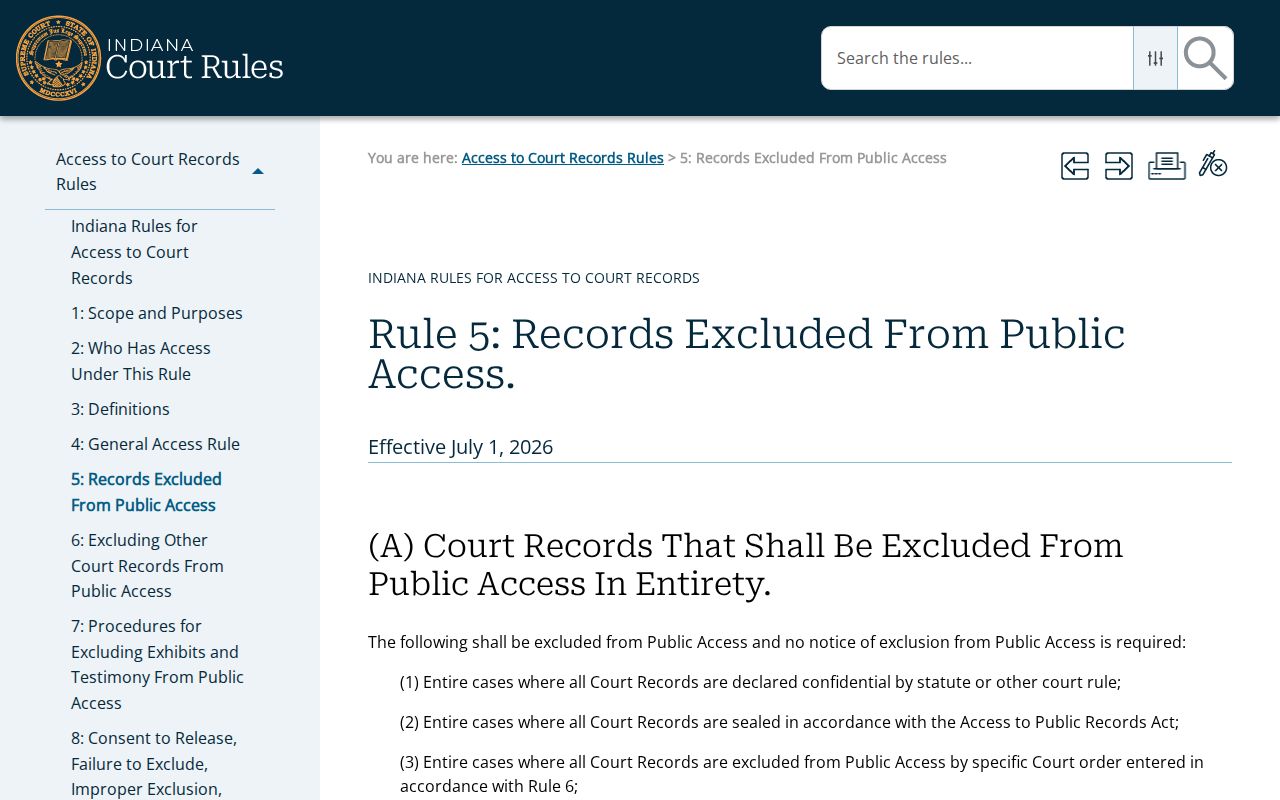
That rule is why juvenile, mental-health, sealed, expunged, privileged, or problem-solving supervision material may be missing or redacted from a docket search. A result that comes up empty is not proof that no case exists.
Key access rules:
Access Rule 1 sets Indiana’s access framework.
Access Rule 5 lists confidential records.
Access Rule 9 governs extraordinary verified requests.
Restricted Dearborn Criminal Searches
Start with the basics. Check spelling, court selection, date range, and whether the matter uses a city-court code. Then ask the clerk whether the record is public, remotely available, or restricted. Parties and their attorneys can hold greater authorized access than the general public. Protected names or identifiers may still be redacted. The rest of a CCS stays visible. Do not hunt for a workaround to a sealed record.
An extraordinary Access Rule 9 request is a formal, verified process. It identifies the material, gives notice, allows a response, and requires a court decision. Disclosure is not guaranteed. When a public record is simply absent online, the proper fallback for a Dearborn County criminal docket is straightforward. Visit the courthouse, make a specific clerk request, or order a certified copy. Note: Verify every Dearborn County criminal docket result with the court or clerk.